PENG9570 — Lecture 6 (March 11th)
Wave equation for sound
Heat/diffusion equation
equations
Cable equation ,
 Reaction-diffusion equations
Navier-Stokes equations
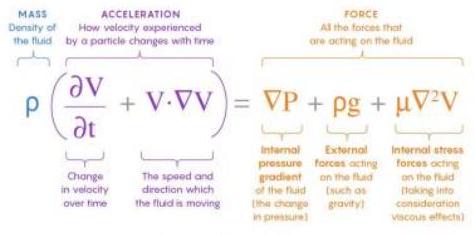
Navier-Stokes Equations Describe the flow of incompressible fluids.
Maxwell’s equations
| (1) | Gauss’ Law | |
|---|---|---|
| (2) | Gauss’ Law for magnetism | |
| (3) | Faraday’s Law | |
| (4) | Ampère-Maxwell Law |
Partial differential equations (PDEs)
Solution is a function of more than one variable, e.g. Examples:

Conservation laws
:Density of a substance Conservation law in differential form:
: flux of substance (or heat flux) : production
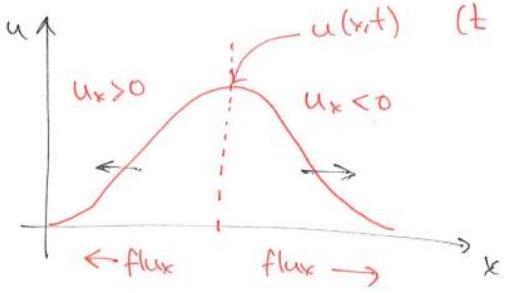
Diffusion (and heat): . Then
The heat PDE / Diffusion PDE is a linear PDE
1 D heat PDE / diffusion PDE with source:
Can be written in terms of the operator :
is linear since
For homogeneous problems , superpositions of solutions are also solutions:
Initial boundary value problem (IBVP)
1D heat PDE / diffusion PDE with initial and boundary conditions
Solution is unique (this can be proven) !
Finite difference method for diffusion equation
Consider the 1D diffusion PDE with initial and boundary conditions
Use the approximations
Finite difference method for 1D diffusion equation: grid and explicit scheme
Let . Then,
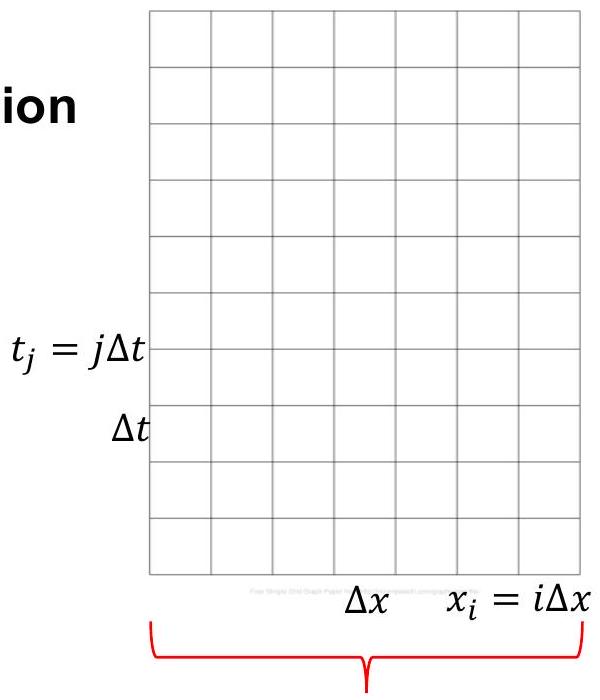
Finite difference method for diffusion PDE: explicit scheme
Equations:
Solution at time step is explicitly expressed in terms of solution at time step . That is, the explicit scheme is
where
Stability of the explicit scheme
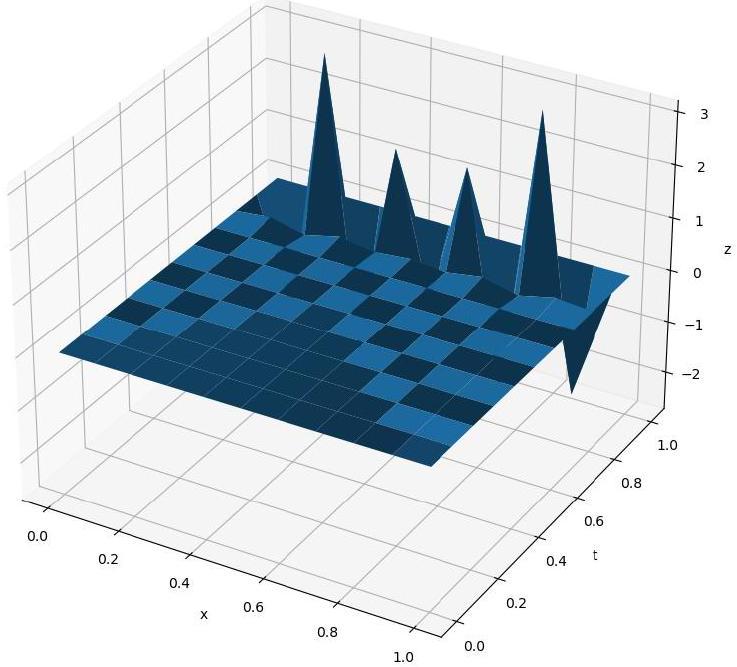
The solution of goes to 0 when . Therefore, we should have
A result from linear algebra
A matrix is diagonalizable if we can write
where is a diagonal matrix with the eigenvalues of on the diagonal.
Then,
It all have , then .
What are the eigenvalues of ? (: is an eigenvalue.)
We know that the eigenvalues of are
Note that
Since the eigenvalues of are , the eigenvalues of are :
For stability we need :
Specifically,
Stability requirement for the explicit scheme.
Implicit scheme for the heat/diffusion PDE
PDE: (same as in explicit scheme)
Discretized PDE:
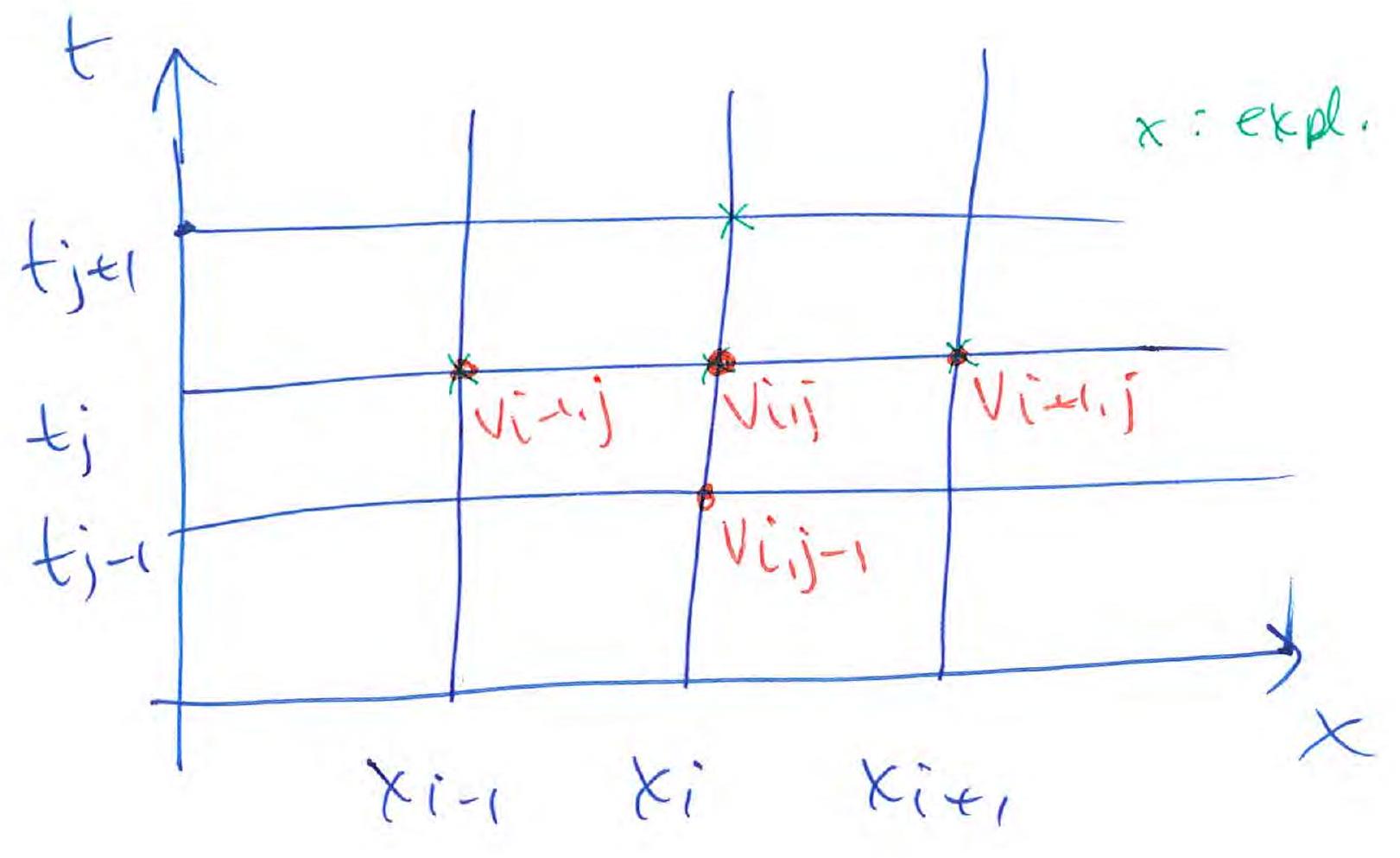
“Calculation molecule”: the scheme couples and .
This gives us the scheme
Numerical solution of implicit scheme Is this scheme stable? has eigenvalues , where .
All eigenvalues of are > 1.
Reminder:
Eigenvalues of are .
Thus, has the eigenvalues such that all eigenvalues of satisfy
The implicit scheme is stable, regardless of the value of .
Crank-Nicolson scheme
Approximations: (same as in the implicit scheme) (at )
Weighted average of the approximations to at and .
Taylor-expanding these expressions at , we get Similarly, if :
The C–N scheme with gives a second order error in both and at . C–N scheme for :
Is this scheme stable? Eigenvalues of :
So, eigenvalues of are
We have
This is and :
Scheme is stable for all .
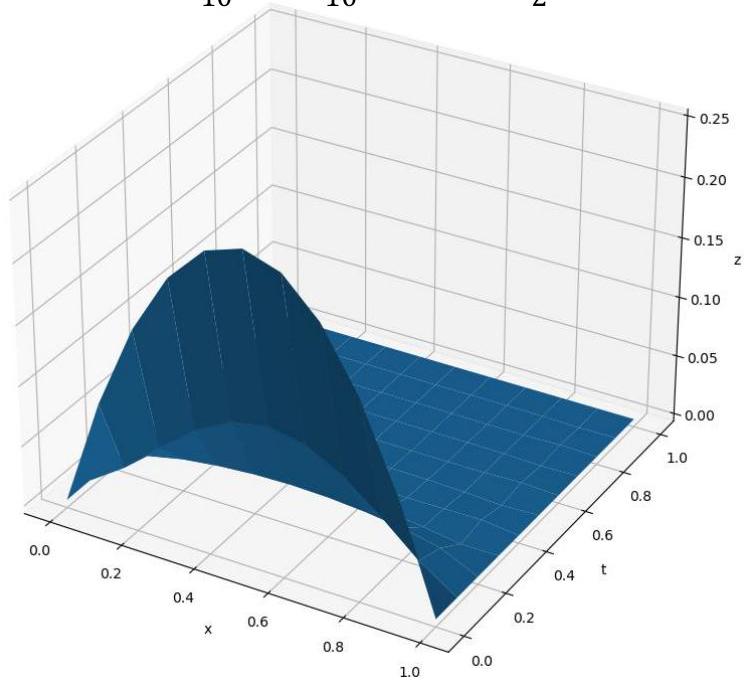
Numerical solution obtained using the explicit scheme
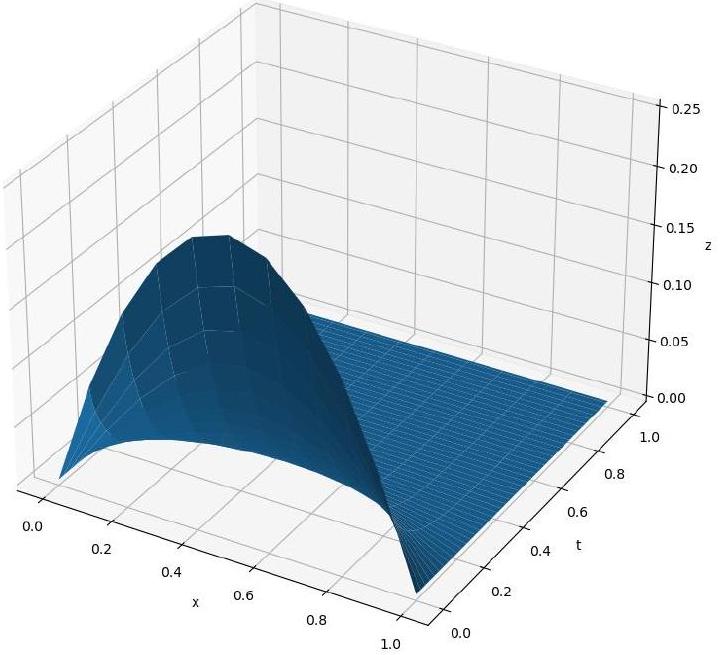
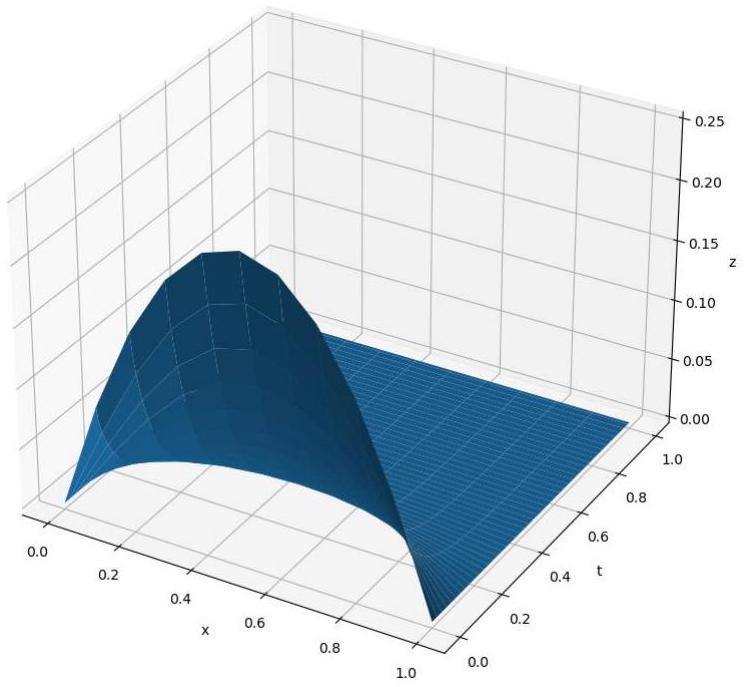
Numerical solution obtained using the implicit scheme
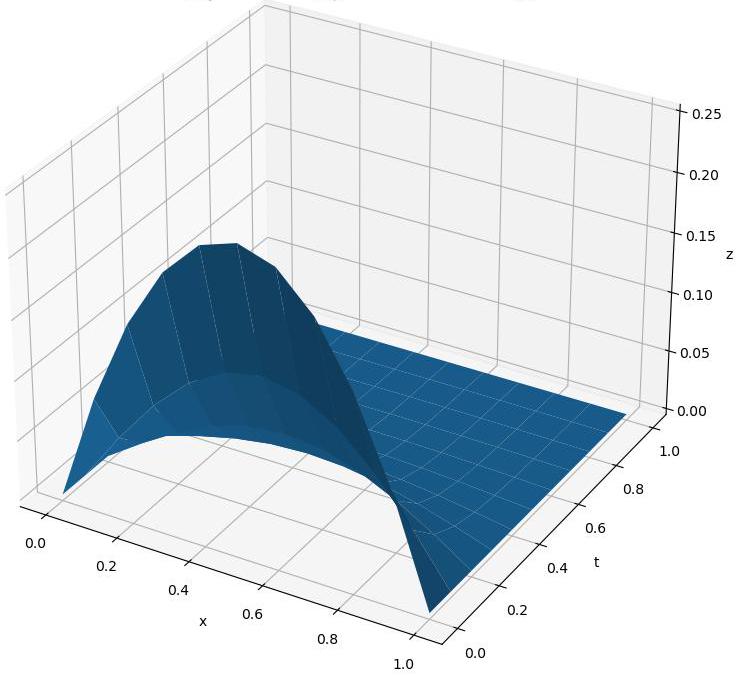
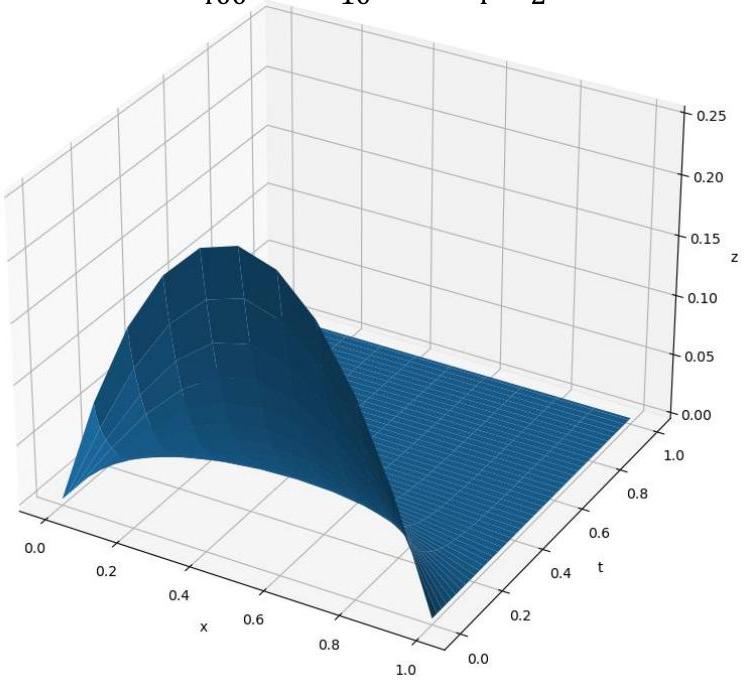
Numerical solution obtained using the C-N-scheme