Welcome to PENG9570
Applied Mathematical Modelling and Analysis Leiv Øyehaug — OsloMet (Oslo Metropolitan University)

Practical information
- Lecturers: Leiv Øyehaug (course responsible) and Sølve Selstø
- Course plan: https://student.oslomet.no/studier/studieinfo/emne/PENG9570/2025/HØST
Teaching sessions

Uke 10, 2026:

| Time | Mon 9/3 | Tue 10/3 | Wed 11/3 | Thu 12/3 | Fri 13/3 |
|---|---|---|---|---|---|
| 08:00–10:00 | Practical information; project | Lecture 08:30–10:15, Rom P35 PI243 (L. Øyehaug) | Lecture 08:30–12:15, Rom P35 U1007 (L. Øyehaug) | Lecture 08:30–12:15, Rom P35 PI243 (L. Øyehaug) |
Project and exam
- Project:
- As much of the syllabus as possible should be applied in the project (e.g. modelling, analysis, numerical solution)
- Deadline for project report submission: June 1st
- Report has to be approved for the candidate to take the exam
- Oral exam:
- Presentation of project, including questions
- Questions from the syllabus
- Pass / no pass (Pass B!)
- June 15th
Canvas
- Canvas page for the course: https://oslomet.instructure.com/courses/33405
- All course material will be made available here
Literature
- HJ Ricardo [HJR]: A Modern Introduction to Differential Equations, 3rd ed. (chapters 1–3, 6, 7): https://www.sciencedirect.com/book/monograph/9780128234174/a-modern-introduction-to-differential-equations
- Compendiums (homemade, see Canvas)
- Morten Hjorth-Jensen: Computational Physics (with permission, link in Canvas)
- Lecture notes
About me
- Leiv Øyehaug
- Associate professor of applied mathematics, Department of Computer Science
- Background mainly in modelling biological systems
- E-mail: leiv.oyehaug@oslomet.no
- Office: P35-PS234
Main topics of the course
Analysis of ODEs — Lectures 1 & 2
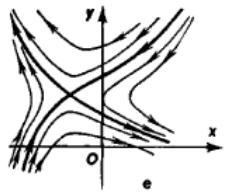
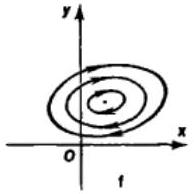
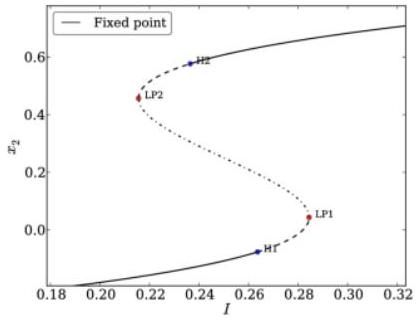
Analysis of ODE systems — Lectures 2 & 3
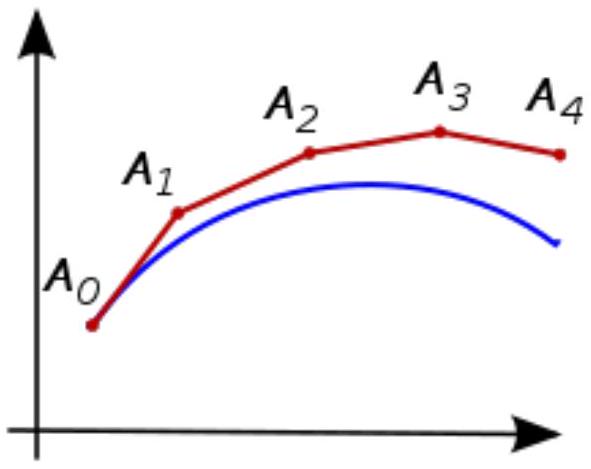
Numerical methods for ODEs — Lectures 3 & 4
Introduction to PDEs — Lecture 4
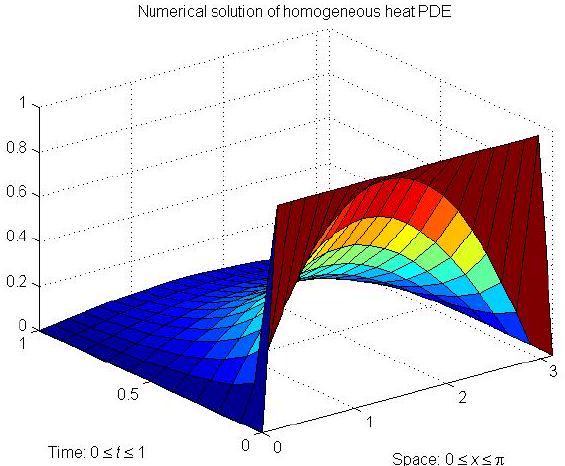
Numerical methods for PDEs — Lectures 5 & 6
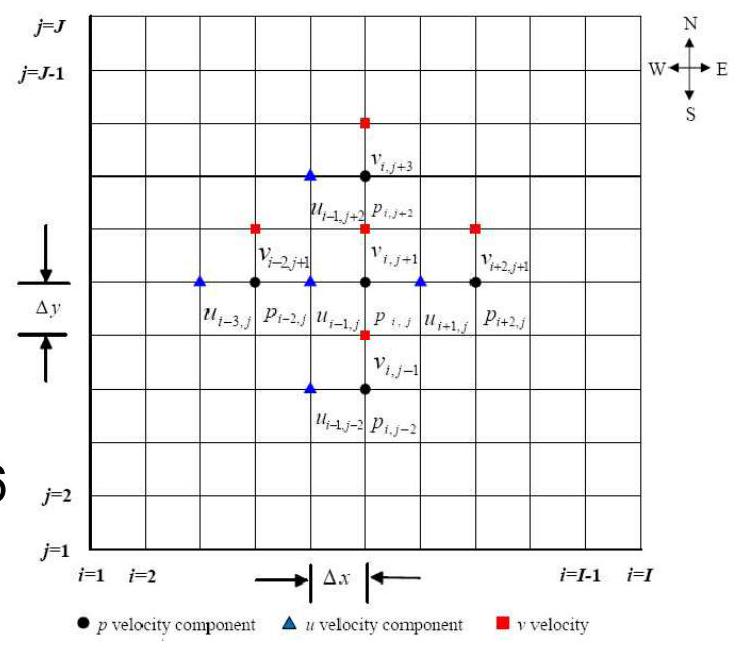
Numerical methods for quantum physics — Lecture 7
Summary
What is an ordinary differential equation (ODE) and what is an initial value problem?
An ordinary differential equation is an equation that relates a function , its derivatives and an independent variable (in this case ):
An initial value problem consists of a differential equation plus initial values for and, possibly, one or more of its derivatives. Example:
What is the steady state (critical point / equilibrium) of a first order ODE?
- In one-variable models , the steady state is where the derivative is zero:
- In two-variable models , the steady state is where both derivatives are zero: and
What does it mean that a steady state is (i) stable, (ii) asymptotically stable, and (iii) unstable?
- Stable: small perturbation from means that solution stays near for all time
- Unstable: small perturbation from leads to solution escaping from
- Asymptotically stable: a solution that starts near enough to will converge to as
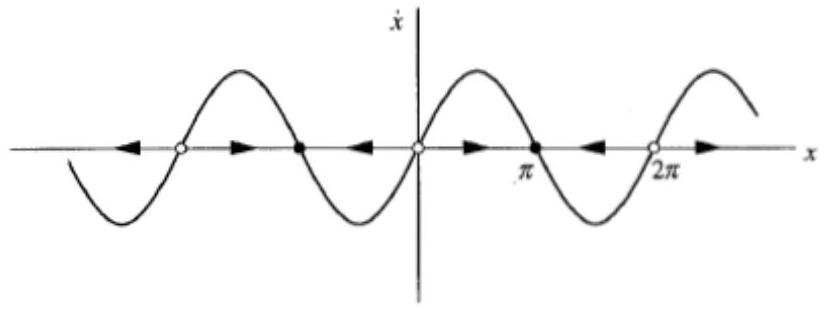
How are phase line plots used to provide insights into the dynamics of the solution?
Where do we find mathematical models?
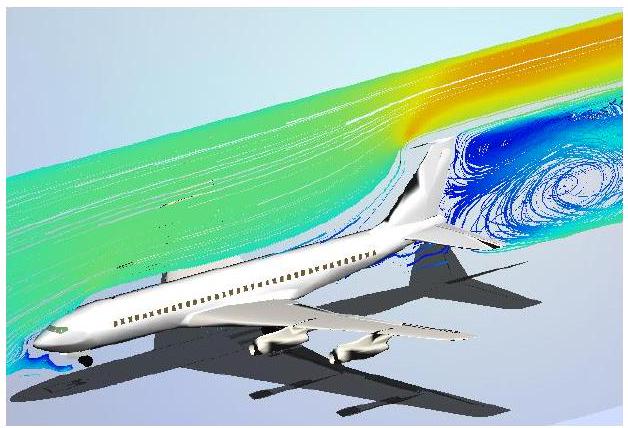
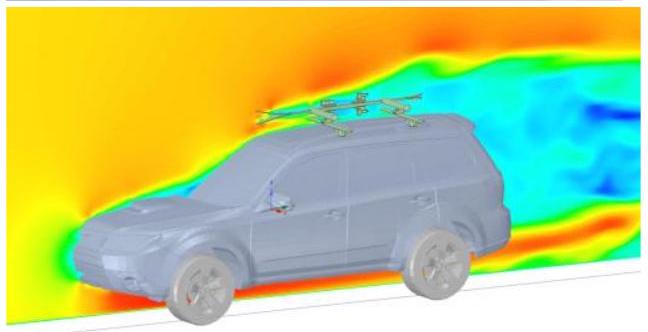
Fluid dynamics
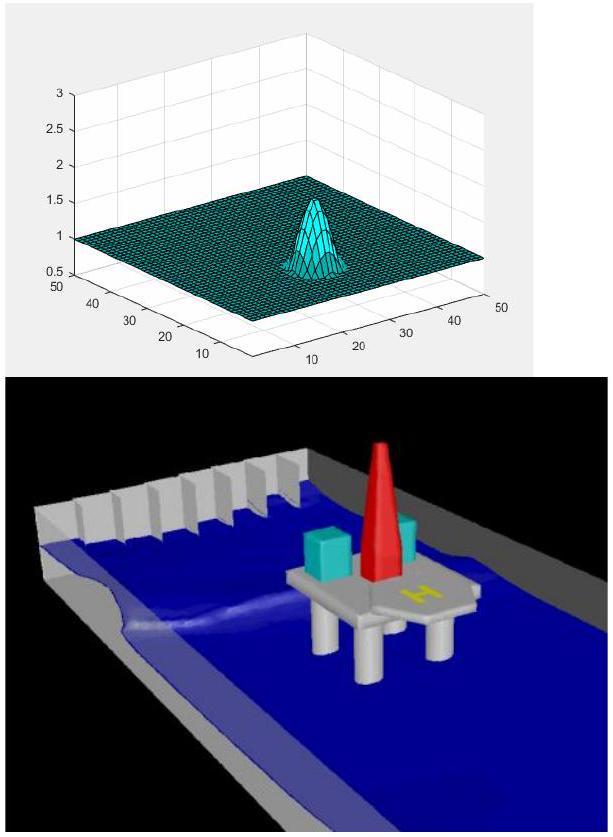
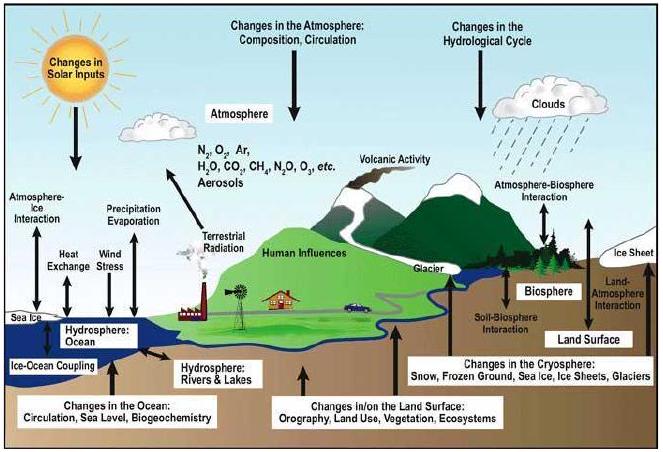
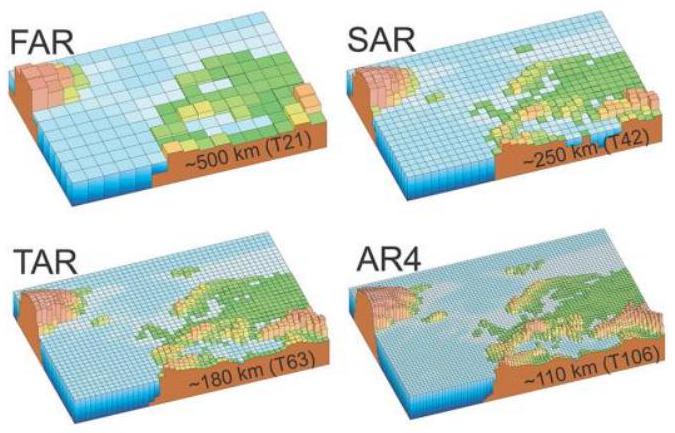
Climate modelling

Modelling covid and other infectious diseases
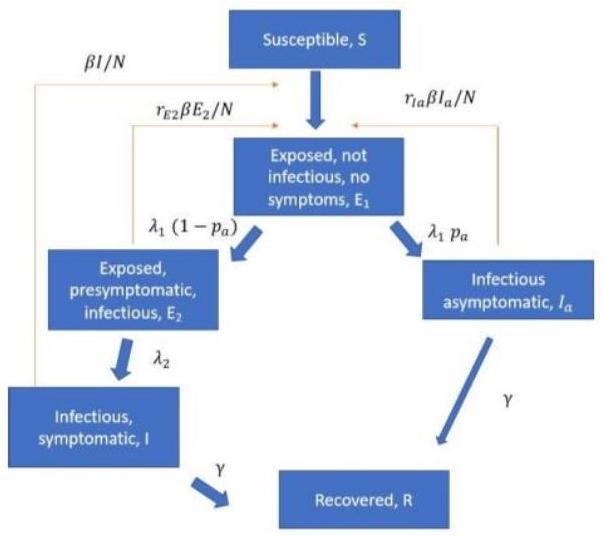
Source: https://www.fhi.no/en/id/infectious-diseases/coronavirus/coronavirus-modelling-at-the-niph-fhi/
Physics engines for realistic physics in computer games




Alan M. Turing (1912-1954)


Enigma:

- Pioneer in computer science
- Developed a theory for biological pattern formation:
Pigment patterns in zebra fish: experiment and simulation

 Kondo & Miura, Science, 329, 2010. Showing laser ablation of pigment cells, migration of new cells, and a comparison of experiment with simulation.
Mathematical models in drug design

Mathematical Modelling to Guide Drug Development for Malaria Elimination — Hannah C. Slater, Lucy C. Okell, and Azra C. Ghani.
Data science, machine learning and AI

- Linear algebra
- Optimization
- Statistics and probability
Why do we need mathematical models?
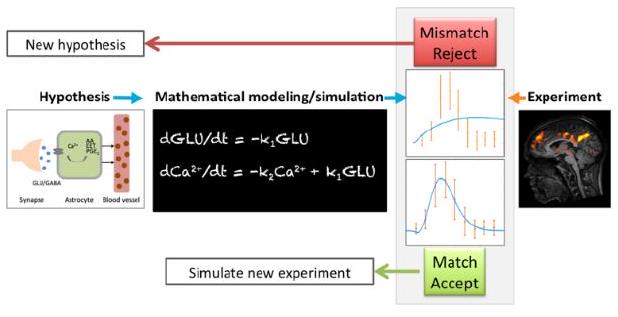
- To develop scientific understanding
- e.g. hypothesis testing using the model as a testbed or laboratory
- To predict outcomes of experiments
- e.g. perform experiments in silico to reduce costs and alleviate the need for animal experiments
- To test the effect of changes in a system
- e.g. test the effect on model output of injecting a certain substance into the cell
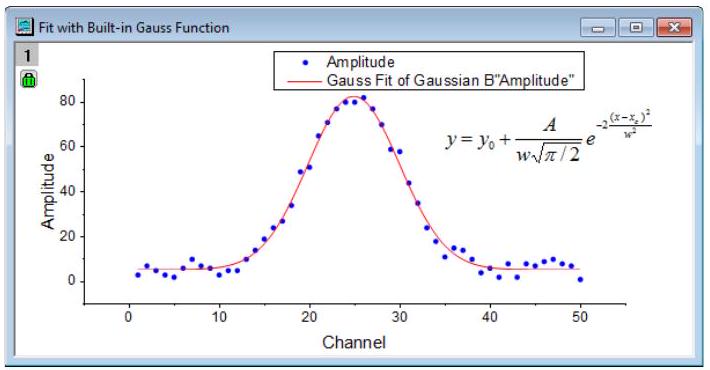
- To estimate parameters in a system
- e.g. estimate parameter values by tuning them until the best fit between model output and empirical data is reached
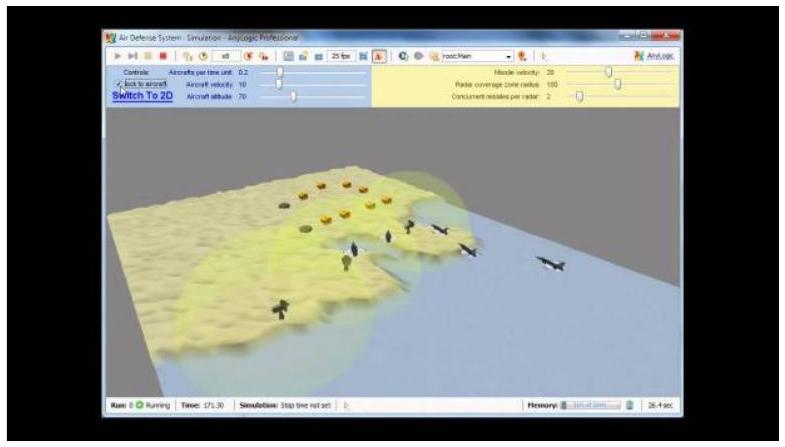
- To aid in decision making
- e.g. describe various possible military scenarios using modelling and simulation. Generals may base their decisions on model outputs.
Different types of mathematical models
Types of models: Mechanistic vs empirical
- A mechanistic model uses available theoretical information, an empirical model does not
- The empirical model accounts quantitatively for changes associated with different conditions
6-1 Introduction To Empirical Models
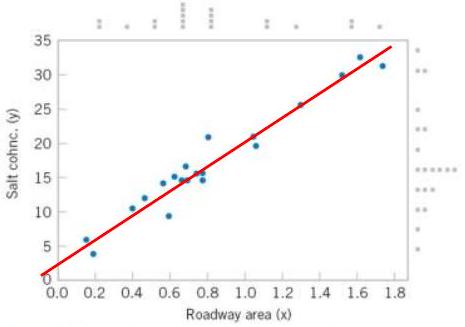
Figure 6-1 Scatter diagram of the salt concentration in surface streams and roadway area data in Table 6-1.
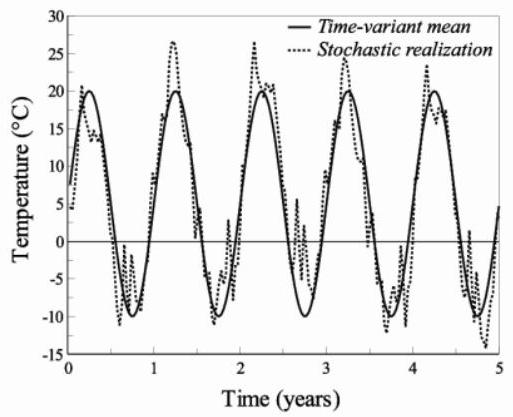
Types of models: Deterministic vs stochastic models
- Deterministic models ignore random variation
- Stochastic models account for randomness that often occurs in nature
Types of models: Dynamic vs static
- A dynamic model accounts for the system’s time-dependence
- A static model describes the state of the system in equilibrium
Types of models: Black box vs white box
- White box models are transparent, we know the details of the model and how the model produces predictions
- Black box models produce output that we can observe, but without knowing how it is produced
- (analogous to black box vs white box software)
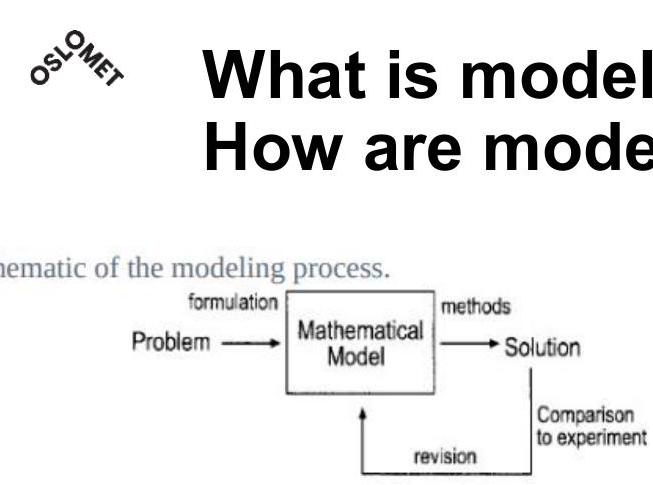
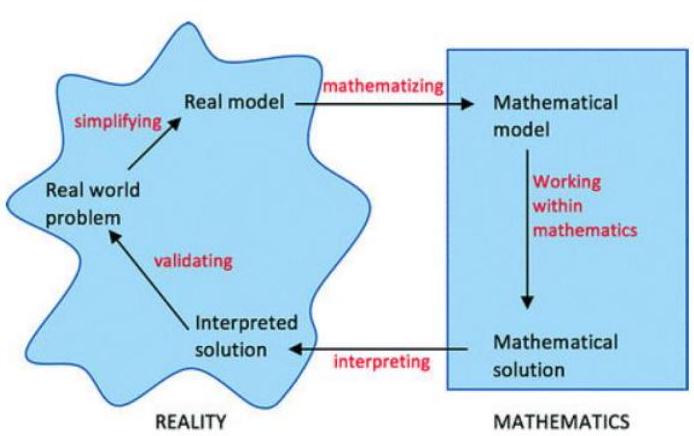
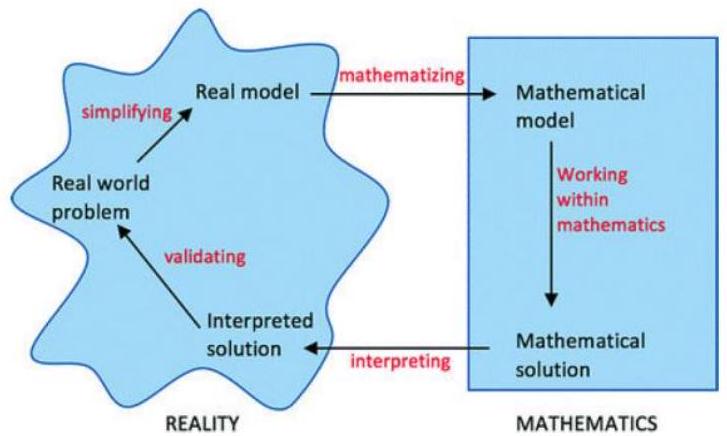
The modelling cycle
- Describe the real-world model
- Formulate the mathematical model
- Calculate the solution of the model
- Interpret the solution
- Validate the model against real-world observations
Note: Progress is not necessarily sequential, and several iterations might be needed.
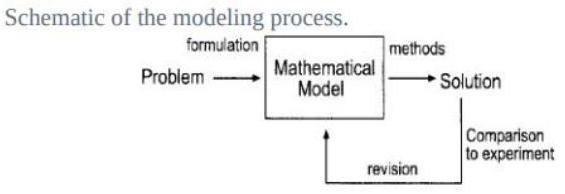
Compromises in mathematical modelling: how «good» should it be?
- First level of compromise: identify the most important parts of the system, include these in the model and exclude the rest.
- Which parts are most important depends on the questions one wants to answer.
- Examples:
- Modelling a stone falling from a low height — air resistance can be justifiably neglected
- Modelling a parachute — air resistance is of course crucial
- Second level of compromise: complexity of mathematical expressions.
- Occam’s razor: the simplest mathematical expression is the best, since it requires the fewest assumptions (as long as the model maintains its realism).


Some examples of models
Second order differential equations
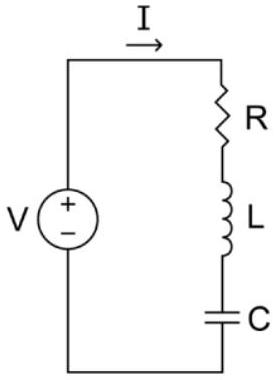
Newton’s 2nd law gives:
Kirchhoff’s law gives:
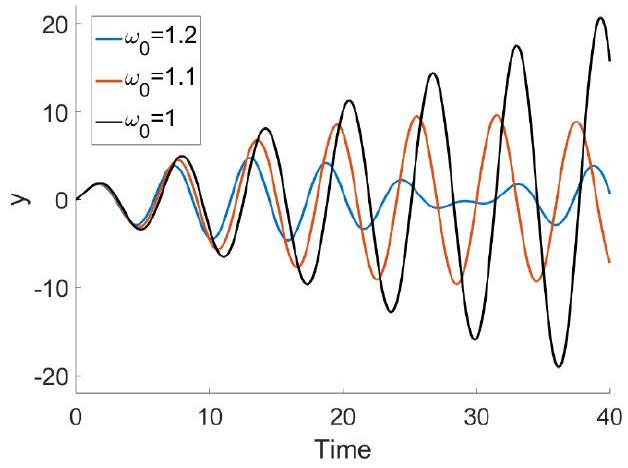
Resonance in second order differential equations
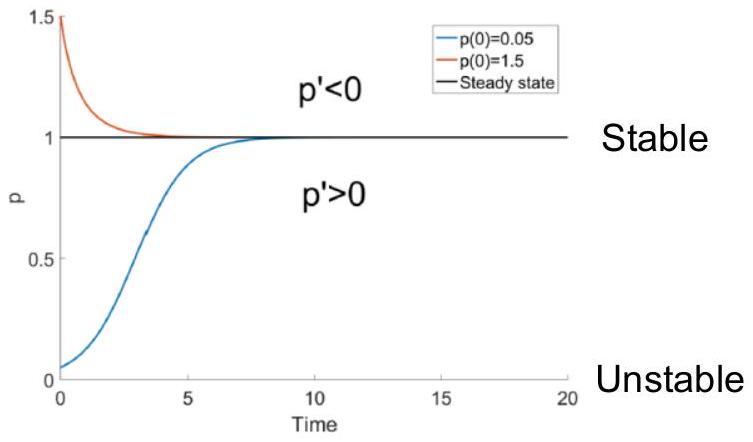
Population dynamics: the logistic equation
Steady states: .
Population dynamics: predator–prey interactions
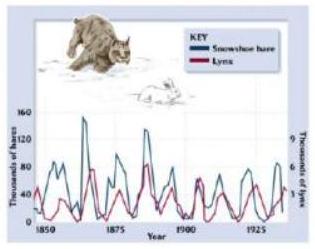
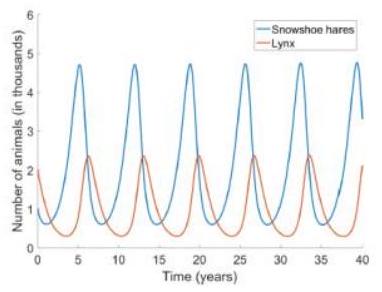
Steady states: and .
 Alan L. Hodgkin
 Andrew Huxley
Mathematical modelling in physiology
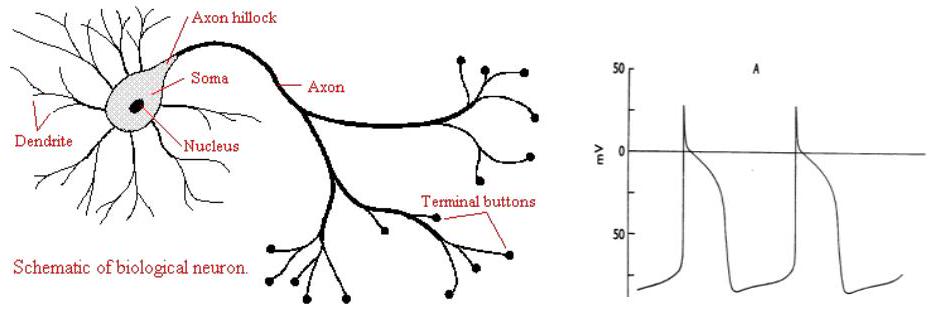

 Denis Noble
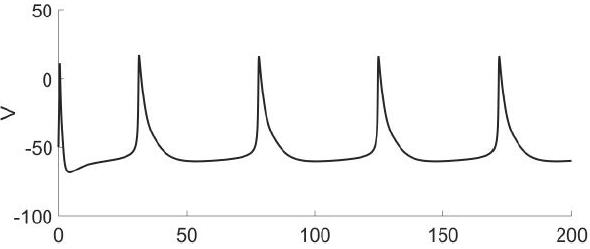
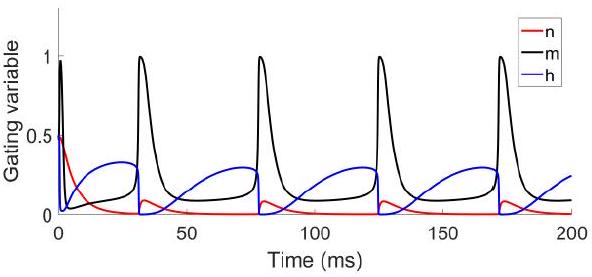
The Hodgkin–Huxley model

Gating conductances of K- and Na-channels depend on interesting dynamics.
Information flow through neurons:
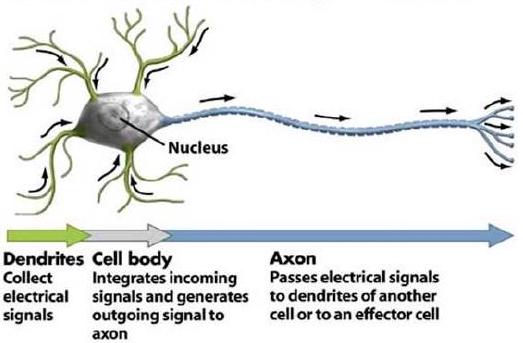
The Hodgkin–Huxley model
Differential equations
Why consider differential equations?
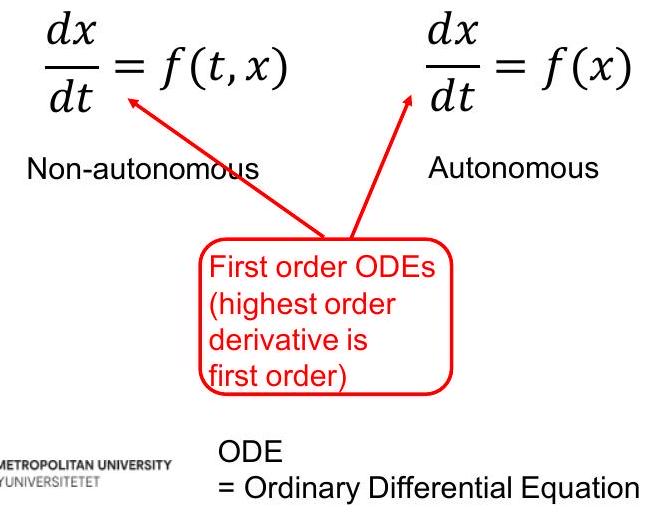
Describes dynamics in terms of rate of change.

«Solvable» ODEs
Linear and homogeneous first order ODEs:
Separable ODEs:
First order general linear ODEs:
Second order linear ODEs with constant coefficients:
Problems
- Solve the ODEs:
- Solve the initial value problems:
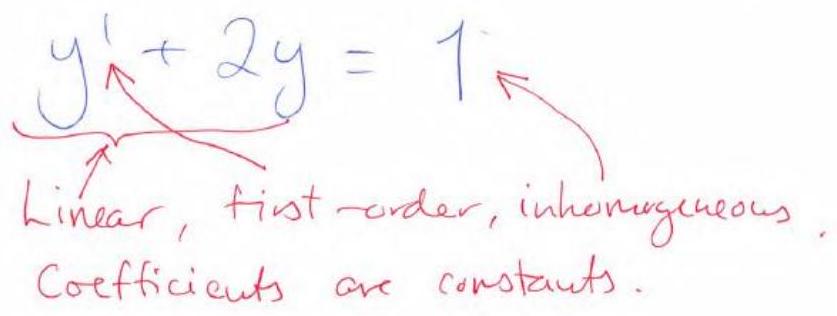
Worked example:
This is a linear, first-order, inhomogeneous ODE with constant coefficients.
General solution:
where is the general solution of the corresponding homogeneous ODE and is a particular solution.
is the general solution of:
is a particular solution of . We observe that is a particular solution. Therefore:
Worked example:
This is an initial value problem (IVP): the ODE plus the initial condition . The ODE is separable:
Integrating:
Applying :
Two solutions:
Slope fields
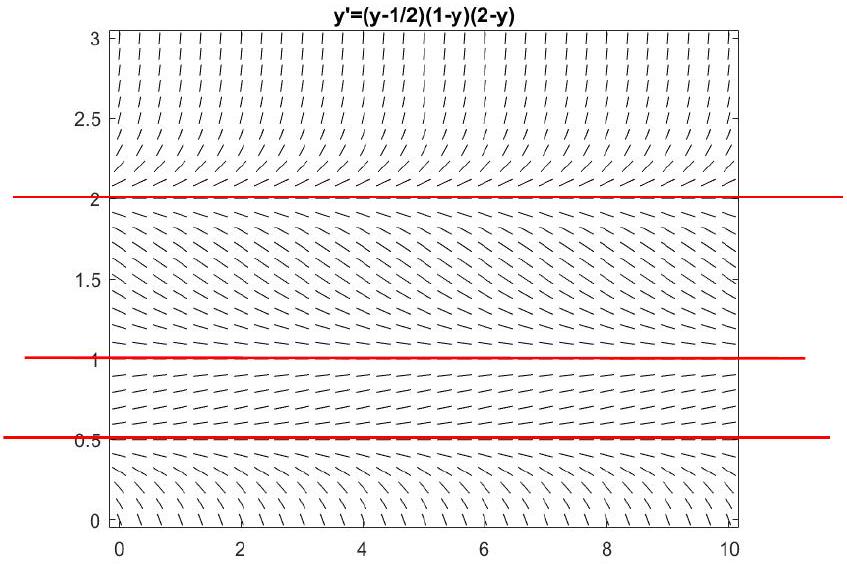
Slope field (direction field)
- Differential equation:
- The derivative is the slope of the tangent of the solution curve
- A slope field is defined by the magnitude of the derivatives, indicated by short straight lines
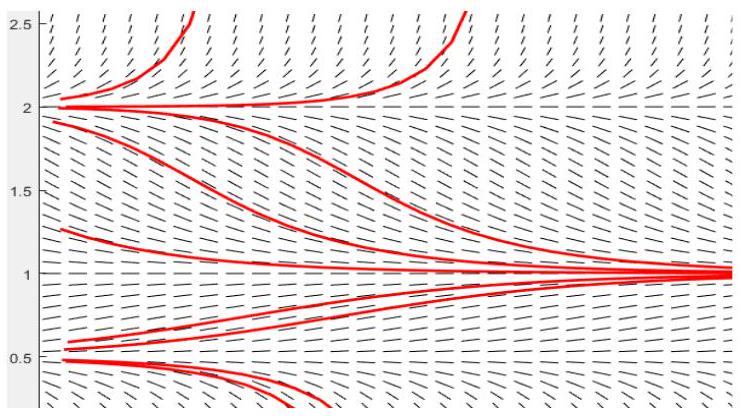
- An ODE has (most often) infinitely many solutions
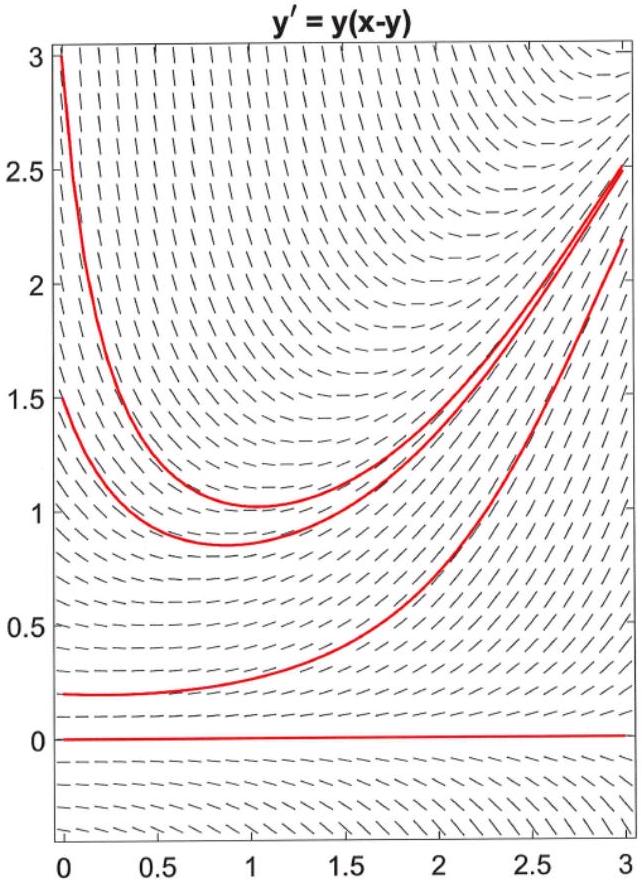
The initial value problem
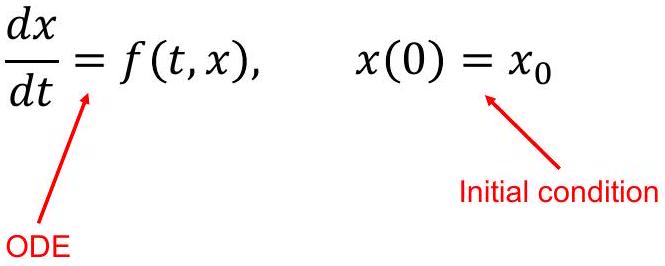
Normally one solution per initial value. (Shown: solution with initial condition .)
Slope fields, examples
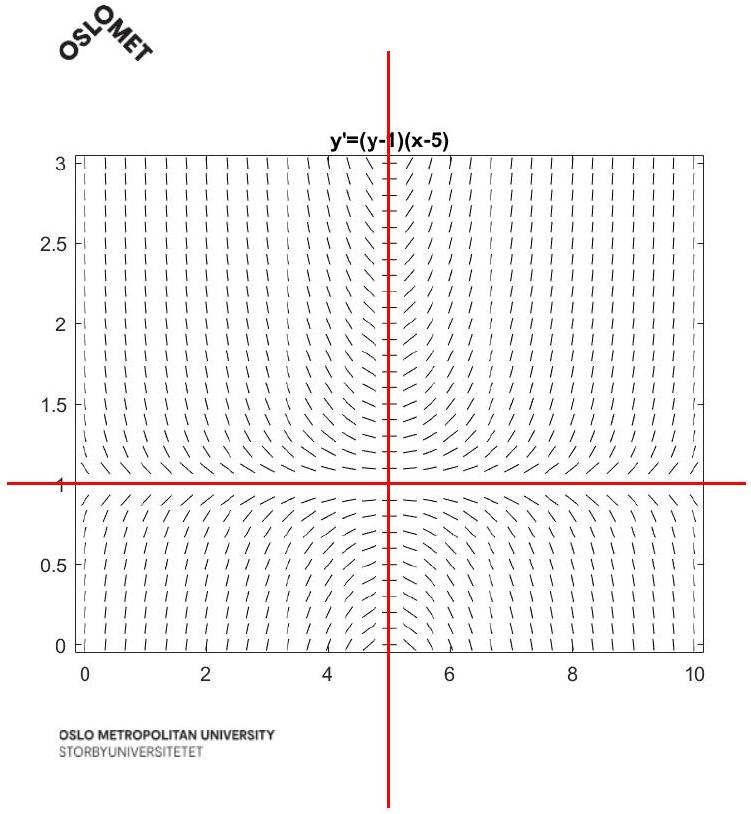
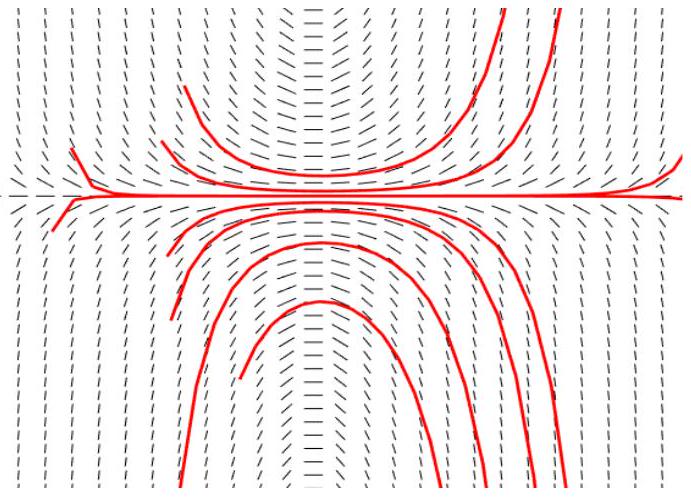

Slope fields, problem
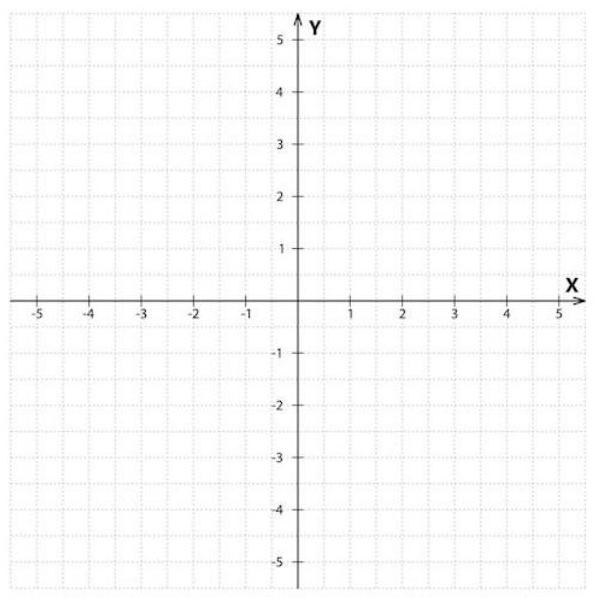
- Sketch the slope field of the ODE
(calculate for a number of points in the coordinate system)
- What kind of solutions do we have?
Solving
As a separable ODE:
With , the general solution is .
Using the integrating factor:
Assume :